
Introduction: In the realm of structural engineering, the quest for understanding the dynamic behavior of systems has led to the development of sophisticated analysis techniques. One such powerful method is Free-Free Modal Analysis, a process that goes beyond conventional modal analysis by considering structures that are unrestrained at their boundaries. In this blog, we’ll explore […]

Supports are arguably one of the most important aspects of a structure, as it specifies how the forces within the structure are transferred to the ground.
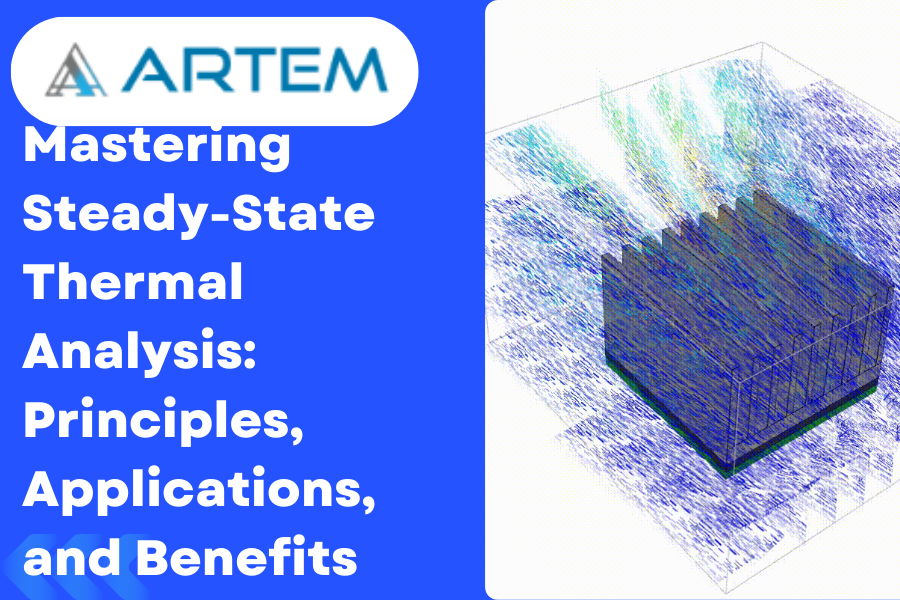
Introduction: In the intricate world of engineering and design, understanding how heat is distributed and managed within structures is paramount. Steady-State Thermal Analysis stands as a powerful tool in this quest, providing engineers with invaluable insights into temperature distributions, heat flow patterns, and the thermal equilibrium of a system. In this blog, we’ll delve into […]
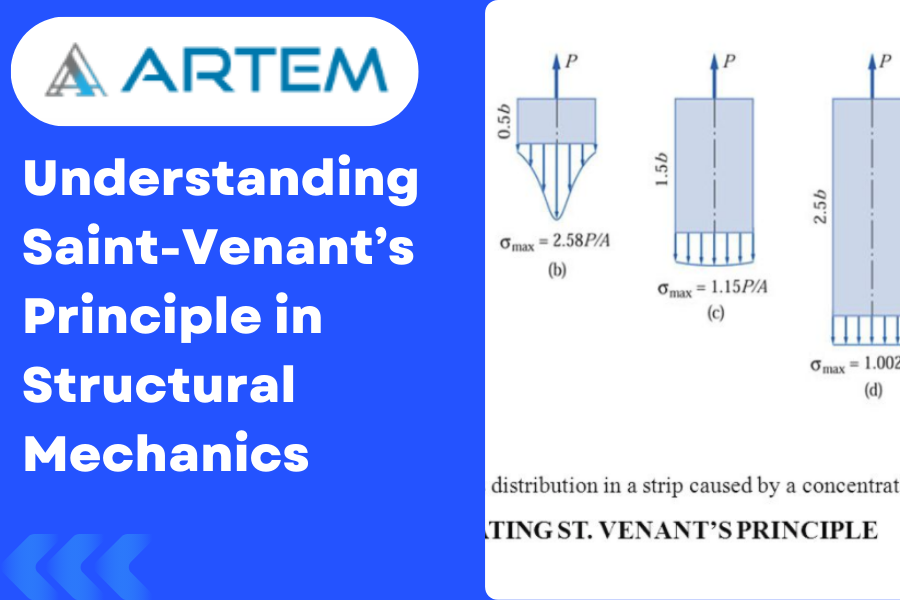
Saint-Venant’s Principle, named after the French engineer Adhémar Jean Claude Barré de Saint-Venant, is a concept in structural mechanics that provides guidance on how the distribution of stress becomes more uniform at a sufficient distance from a concentrated load or point of load application. The principle is particularly useful when analyzing the behavior of structures […]

In modal analysis, mode shapes and nodal diameters are essential concepts that provide valuable insights into the dynamic behavior of structures. Let’s delve into each term and understand their significance, along with the corresponding formulas. Mode Shapes: Definition: Mode shapes represent the spatial distribution of displacements within a structure at a specific natural frequency. They […]
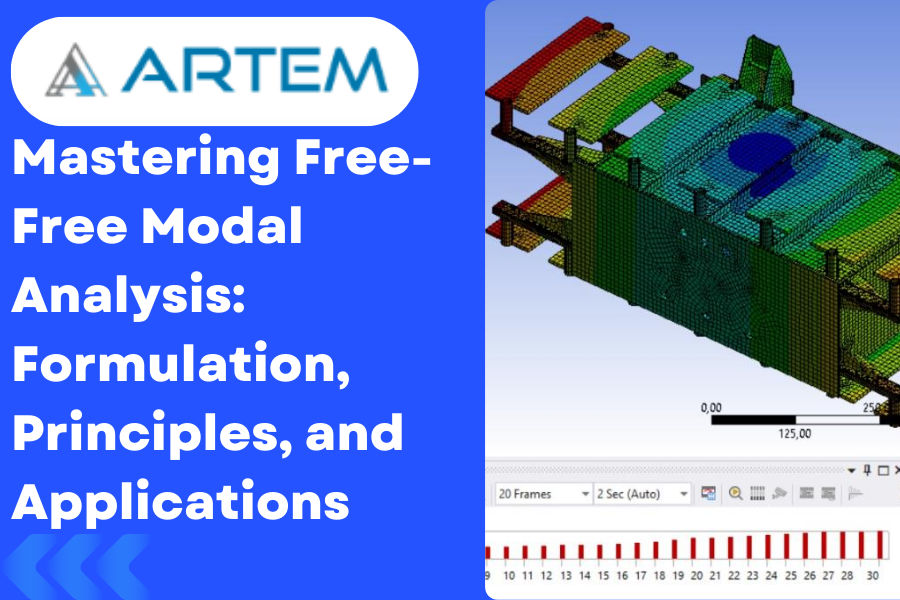
In the realm of structural engineering, the quest for understanding the dynamic behavior of systems has led to the development of sophisticated analysis techniques. One such powerful method is Free-Free Modal Analysis, a process that goes beyond conventional modal analysis by considering structures that are unrestrained at their boundaries. In this blog, we’ll explore the […]
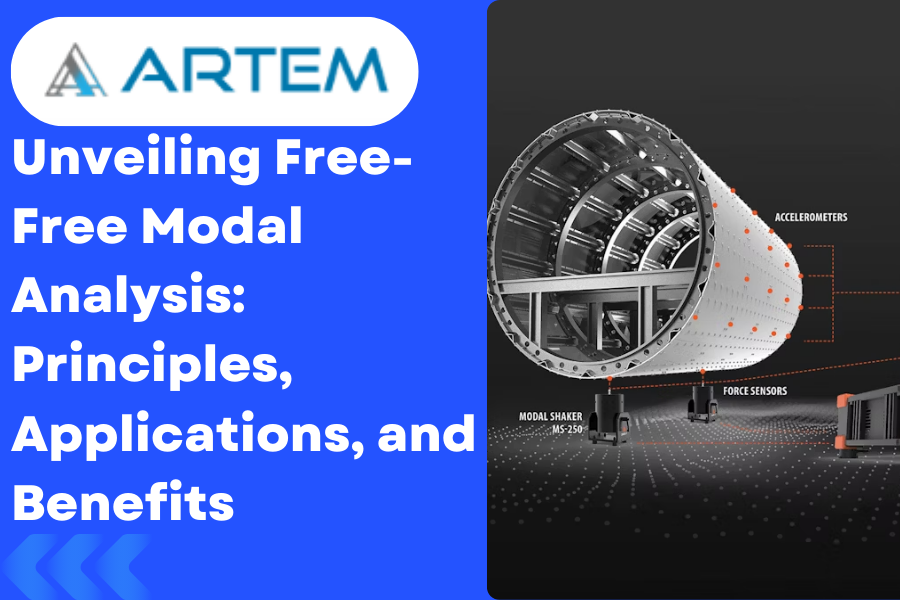
Introduction: Structural analysis is a critical aspect of engineering and design, providing invaluable insights into the dynamic behavior of various systems. One powerful technique used in this domain is Free-Free Modal Analysis. In this blog, we’ll delve into the intricacies of this methodology, understanding its principles, applications, and how it contributes to optimizing the design […]

Finite Element Analysis (FEA) is a numerical method used to analyze and solve complex engineering problems. It is a computational technique that breaks down a complex structure or system into smaller, simpler elements called finite elements. By discretizing the system into these elements, the behavior of the entire system can be approximated and analyzed. According […]

Finite Element Analysis (FEA) is a numerical method used to solve complex engineering problems by dividing them into smaller, more manageable elements. Software and mathematics play crucial roles in FEA by facilitating the analysis process. Here’s a breakdown of their roles: Software: Preprocessing: FEA software provides tools for creating and defining the geometry, applying boundary […]